
What is Service of Process and How Does a Registered Agent Handle It?
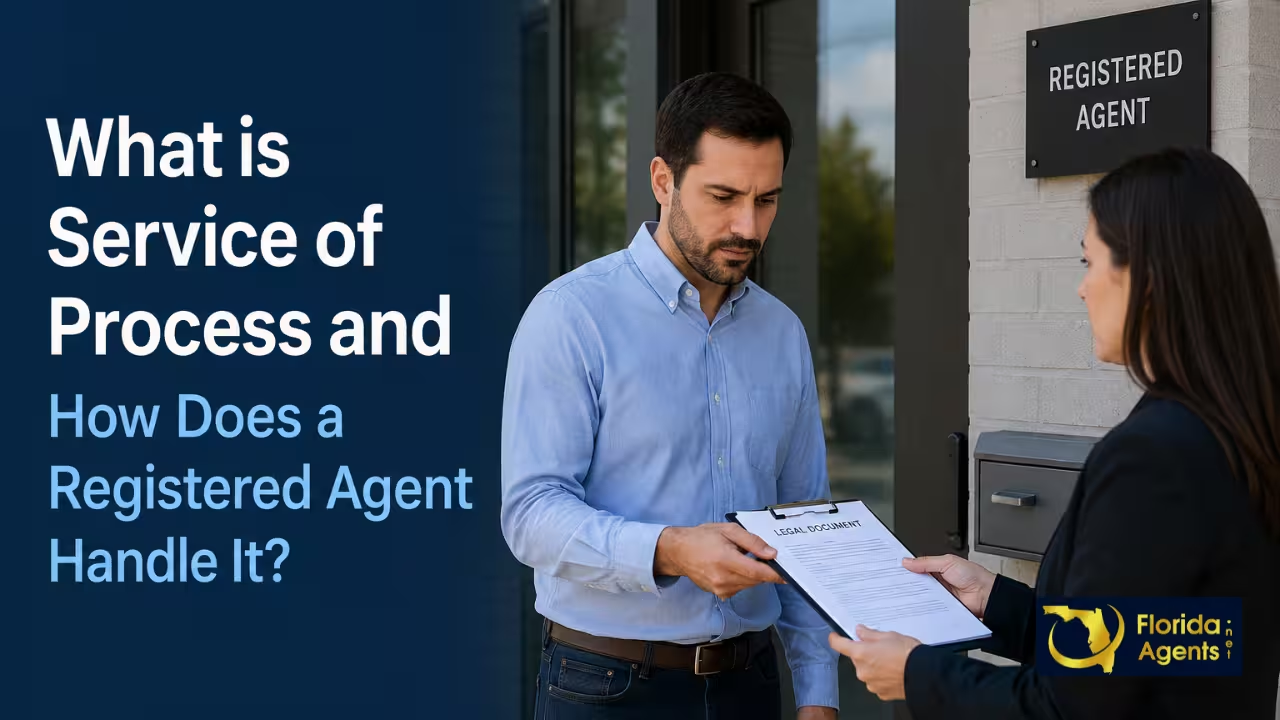
Within the corporate environment, having a corporate organization requires dealing with a myriad of legal and state regulations. It is vital for both company founders, corporate leaders, as well as small business owners to maintain compliance management. Two concepts sit at the absolute center of this regulatory framework: service of process and the role of a registered agent. While these terms frequently appear in corporate compliance literature, their actual operational mechanisms are often misunderstood. An inability to comprehend the proper way in which legal notices and summonses are to be served will have dire consequences for any organization. It is important to understand these basic tenets of corporate governance. This guide covers how professional registered agent networks handle legal documents to shield your enterprise from risk.
Defining Service of Process: The Legal Machinery of Notice
At its core, service of process is the formal procedure used by the court system to establish jurisdiction over a business entity or an individual. Rooted in the constitutional guarantee of due process, the law dictates that a party cannot be subjected to a legal judgment without first receiving adequate, official legal notification of the claims against them.
When a company is sued, the initiating party files a complaint. The court then issues an official court order or a court summons. Service of process is the act of physically delivering these court documents to the defendant. This procedure is typically carried out by a professional process server, a sheriff, or an authorized filing agent.
The scope of documents handled through this mechanism extends far beyond initial lawsuits.
It encompasses a wide array of official instruments, including:
- A subpoena demanding corporate records or testimony.
- Interrogatories and formal discovery requests.
- Garnishment notices targeting employee wages.
- Post-judgment enforcement actions and administrative legal notices.
If a business does not receive these documents through proper channels, the legal machinery keeps moving anyway. Without a reliable system for document receipt, a company might miss deadlines completely, allowing the plaintiff to secure a default judgment. In a default judgment, the court rules in favor of the plaintiff simply because the business failed to respond, making it vital to establish an ironclad legal service workflow.
The Registered Agent: Your Enterprise’s Statutory Gateway
Because a business entity is a legal construct rather than a physical person, a process server cannot simply hand a subpoena to an office building or drop a court order in a standard mailbox. The state requires a designated physical point of contact to accept service on the company’s behalf. This role is filled by the registered agent. Known alternatively as a resident agent or a statutory agent depending on your jurisdiction, this individual or commercial entity serves as the business’s official gateway for all official correspondence and legal notices. When completing your initial business registration paperwork with the Secretary of State, you are required to formally document your agent appointment and provide a physical registered office address. This registered office cannot be a generic P.O. Box or a virtual drop-box. It must be a verifiable, physical street address located within the state of incorporation or qualification. Furthermore, the agent must remain available at that designated location during standard business hours to personally execute the document receipt. This ensures that process servers, state couriers, and regulatory officials always have a reliable, public-facing destination to deliver critical notices.
Step-by-Step: How an Agent Handles Service of Process
When a process server arrives at a registered office address with sensitive court documents, a professional agent initiates a precise, time-sensitive workflow. High-caliber business compliance services handle the intake and document forwarding of critical notices using a strict series of steps.
1. Verification and Acceptance
This is where the process server checks the credentials of the compliance officer. They verify that they are duly authorized to accept service of process on behalf of that particular corporate body. After being verified, the compliance officer then signs the process, which records the precise time when the process is served.
2. Immediate Digital Logging and Scanning
The moment the process server leaves, a strict countdown begins. Professional agencies log the document into a centralized entity management system. The physical legal documents are immediately scanned using high-definition imaging systems, ensuring that every page, exhibit, and court order is captured with perfect clarity.
3. Automated Document Forwarding and Alerting
Time is the most critical asset in legal matters; a typical response window for a lawsuit notice can be as short as twenty to thirty days. Professional platforms like Florida Registered Agent utilize automated, redundant notification frameworks. The digitized files are instantly delivered via secure document forwarding protocols to pre-designated corporate contacts, paired with urgent electronic alerts.
4. Archive and Chain of Custody Management
The physical paperwork is filed in a secure repository, while the digital copy remains archived within a secure, cloud-based compliance management dashboard. This digital trail preserves an immutable chain of custody, giving corporate counsel a reliable record of exactly when the business was served.
Why Relying on a Professional Commercial Agent is Critical
When setting up a business, owners may wonder if they can service as their own registered agent, or assign a typical office worker as the registered agent. While using a noncommercial registered agent is legally permissible in many states, relying on a personal or operational business address introduces significant liabilities.
Privacy Compromises and Public Exposure
Your registered office address becomes a matter of permanent public record with the Secretary of State.
Reputational Risk
In the case where your firm is involved in any legal issues, a process server delivers the notice of the lawsuit or subpoena to the address where you have registered your firm. If the address you have registered is your shop or office, then a process server can deliver the summons at the same place where your customers or workers are.
Restricted Operational Mobility
If you choose to serve as your own resident agent, you must be present at your registered agent address between 9:00 a.m. and 5:00 p.m., Monday to Friday, throughout the year. This requirement severely limits your operational mobility.
Flawed Document Redundancy
A staff member working internally can lose track of a critical legal document, confuse an important subpoena for junk mail, or forget to forward a judicial directive due to being on vacation. Business compliance solutions ensure that there are no failures because they always have professional compliance employees at hand.
Integrating Agent Workflows into Modern Compliance Systems
Advanced enterprises treat service of process as a core component of their broader corporate compliance and legal risk management strategies. Entrusting this workflow to an established commercial network provides distinct structural advantages.
- Multi-State Coordination: If your business expands into new markets through foreign qualification, you must appoint an agent in each individual state. Partnering with a national service allows you to manage compliance filings and legal notices across all jurisdictions through a single centralized platform.
- Seamless State Requirements Tracking: Beyond handling legal disputes, premium providers monitor your business's overall standing. They keep tabs on the annual report deadline, state franchise tax cycle, and the changes in the business registration requirements, safeguarding your firm against costly late penalties or dissolution.
- Corporate Record Coordination: When the agent receives the notice from the state government, that notice will usually require some updates on your company’s internal documents, like the operating agreement and corporate bylaws. Having a digitized compliance hub ensures your legal team can review and adapt to state requests in real time.
Securing Your Business’s Operational Future
Every formal business entity must operate with the understanding that legal disputes and regulatory inquiries can happen at any time. Service of process is the legal bridge between the court system and your enterprise, and your registered agent serves as the guardian of that connection. Choosing to move away from a risky, noncommercial address and upgrading to a professional provider shields your company from operational disruption. By making use of dependable compliance agents like those who operate in the region through FloridaAgents or across the nation in the commercial arena, you can be assured that your notices will be delivered to you quickly, discreetly, and correctly. In the end, by outsourcing your statutory agent responsibilities, you can rest assured that your privacy is protected from any costly default judgments as well as having all state compliance taken care of for you.
Frequently Asked Questions
What is service of process in simple terms?
Service of process is the legal delivery of court papers, lawsuits, or official notices to your LLC. Your registered agent makes sure you actually receive them.
What is a registered agent?
A registered agent is your business’s official contact who accepts important legal and state documents on your behalf.
What is a registered agent for LLC?
What is a registered agent llc means the designated person or company responsible for receiving official mail for your limited liability company in Florida.
Can I be my own registered agent?
Yes, can i be my own registered agent is allowed in Florida, but many owners switch to professionals later for better privacy.
Can I be my own registered agent for llc?
Can i be my own registered agent for llc is fine when starting, but using your home as the registered agent address can create privacy issues later.
How does a registered agent handle service of process?
They accept the documents at their Florida address and quickly notify you so you can take action.
Why should I use registered agent services florida?
Registered agent services florida give you privacy, reliability, and help staying compliant with state rules.
What is the registered agent address used for?
Your registered agent address is the official public location where all legal papers must be delivered for your business.
Does my registered agent help with Florida Annual Report?
Yes. Good services send reminders so your Florida Annual Report gets filed on time every year.
Do I need an EIN Number for my registered agent?
No, but your EIN Number and itin number (for foreign owners) work together with your registered agent setup for full compliance.
How much do registered agent services usually cost?
Most registered agent solutions run between $50 and $150 per year in Florida.
Will using a professional service protect my privacy?
Absolutely. Your personal address stays off public records when you use a registered agent service.
Can I change my registered agent anytime?
Yes. You can update your Florida Registered Agent through Sunbiz whenever you need to.
What happens if my LLC has no registered agent?
The state may send notices to the wrong place, and your business could lose good standing.
Is a local registered agent florida better than national ones?
Many owners prefer local registered agent florida options because they understand our state’s specific business environment better.
How fast does service of process get forwarded?
Professional services usually notify you the same day or within 24 hours.
Does changing my registered agent affect my EIN Number?
No. Your EIN Number stays the same—only the registered agent details get updated.
Can registered agent services help with other compliance issues?
Yes. Many offer extra support with Florida Annual Report filings and general business questions.
What makes registered agent solutions different from just using a lawyer?
Registered agent solutions focus specifically on receiving and forwarding official documents year-round, not just legal advice.