23

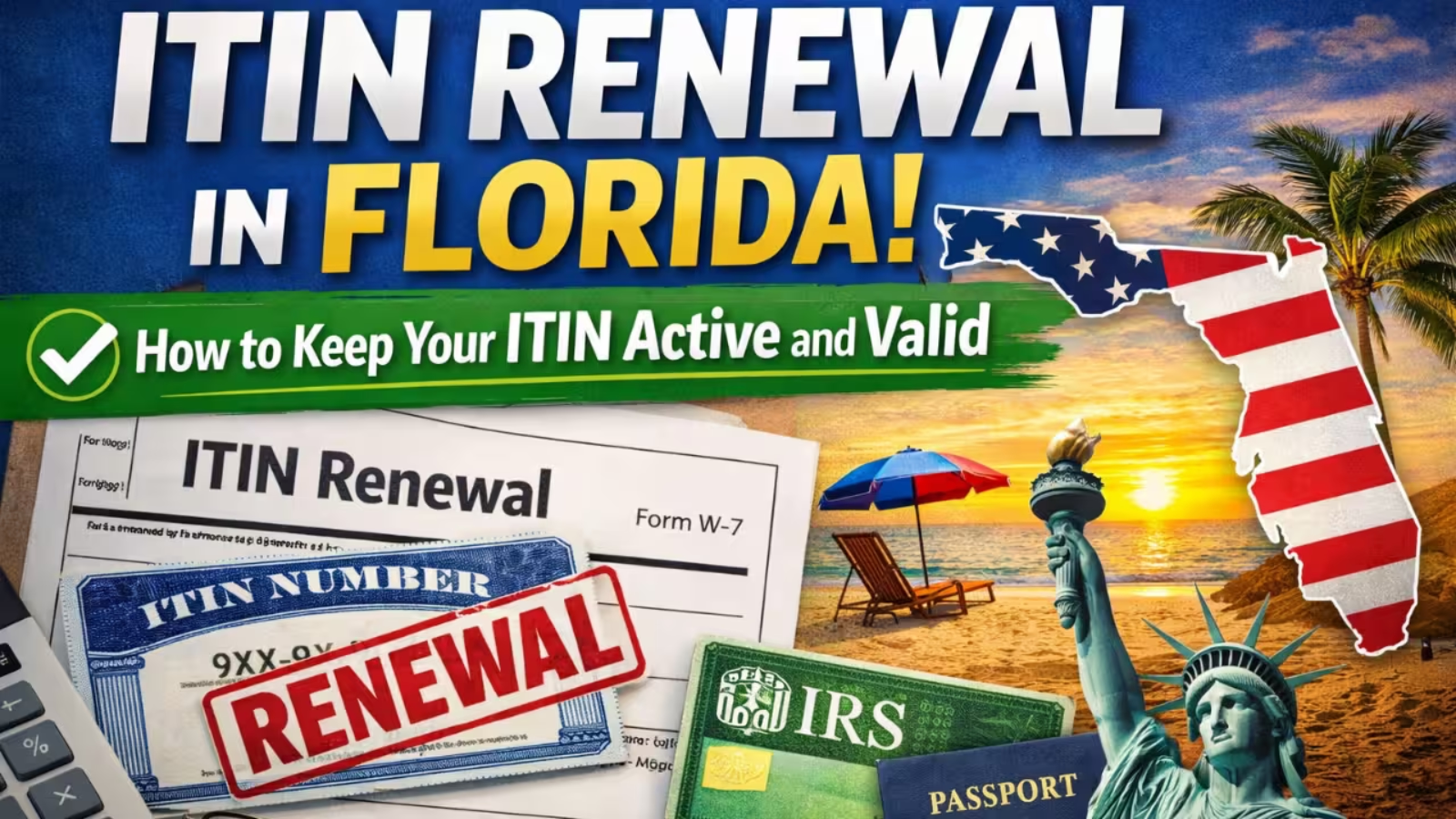
ITIN Renewal in Florida: How to Keep Your ITIN Active and Valid

If your ITIN expired and you’re about to file a US tax return (dependents, joint return, US income like rentals or investments), get it renewed quick—otherwise refunds stall, returns get kicked back, credits vanish. It’s just a tax number, no help for jobs or immigration proof. Process is the same federal rules everywhere, but Florida has decent local Certified Acceptance Agents (CAAs) or Taxpayer Assistance Centers (TACs) in spots like Miami, Orlando, Tampa so you don’t mail originals.

What is an ITIN?

9-digit number (starts with 9) IRS hands out when you gotta file US taxes but can’t get an SSN. For non-resident aliens with US income, dependents/spouses on US returns, that sort of thing. Tax-only use.

Why is ITIN Renewal Important?

Expired ITIN? IRS holds your return, delays refunds, blocks credits, maybe slaps penalties, and banks/payers complain. Renewing means clean filing, money on time, no extra grief. People who drag their feet end up panicking near deadlines.

When Should I Renew My ITIN?

Only renew if expired AND it’ll go on your next federal return. If no return use for three straight years, expires Dec 31 after third year (no use 2023-2025 = expired end 2025). Takes 7 weeks normal, 9-11 weeks Jan-Apr or overseas. Start 2-3 months ahead. Check CP-48 notice or IRS online account. Skip if no return needed (1099 info only doesn’t count).

How to Prepare for ITIN Renewal

Get ready properly—saves tons of hassle.

ITIN Renewal Process in Florida

IRS rules straight up, local help available.

Common Mistakes to Avoid During ITIN Renewal

These get apps bounced:

Last peek irs.gov/itin before send.

Florida tip: Hit a CAA or TAC—keeps passport safe, no mailing stress. Start early, attach return, done. Keeps taxes straight, no surprises. Complicated (dependents/exceptions)? Tax pro or IRS site. Form, docs, submit—simple enough. Good luck out there.

Frequently Asked Questions

The processing time for ITIN renewal can vary depending on various factors, including the time of year and the volume of applications received by the IRS. In general, it can take anywhere from seven to eleven weeks to process an ITIN renewal application. To minimize delays, it is advisable to submit your application well in advance of your ITIN’s expiration date.

No, the ITIN renewal process cannot be completed online. You must submit a completed Form W-7 and the required documents either by mail or in person. However, certain Certified Acceptance Agents (CAAs) are authorized by the IRS to assist with ITIN applications and renewals. You can visit the IRS website or contact them directly to find a CAA near you.

When renewing your ITIN, you need to submit identification documents that establish your identity and foreign status. Acceptable documents include passports, birth certificates, national identification cards, and other official identification documents. Make sure to review the IRS guidelines for a comprehensive list of acceptable documents.

Yes, you can renew your ITIN before it expires. In fact, it is recommended to start the renewal process at least three months before your ITIN’s expiration date to ensure ample time for processing and receiving your renewed ITIN.

If you fail to renew your ITIN before it expires, you may face various challenges when filing tax returns and conducting financial transactions. An expired ITIN can result in delayed refunds, rejection of tax returns, and even potential penalties for non-compliance with tax regulations. To avoid these complications, it is essential to renew your ITIN in a timely manner.


24

Forming an LLC in Florida? Here’s Why It’s a Smart Move

Here’s a fresh take—written like I’m just chatting with a buddy who’s about to start something in Florida. No fancy structure, some real-talk asides, bits from folks I’ve heard from or seen go through it, and yeah, the fee’s still $125 base (that’s $100 for the Articles + $25 for the registered agent designation, straight from Sunbiz right now in ’26—no big changes lately). Mixed up the flow, threw in casual phrasing, kept the exact same headings.

Look, when you’re getting ready to launch a business, the legal side can feel like a headache, but picking LLC in Florida? A lot of people swear by it for good reason. This walks through why it’s usually a solid pick, plus the stuff to actually think about. Protection, taxes, how easy it is—let’s get into it so you can see if it clicks for what you’re doing.

What is an LLC?

Straight up: Limited Liability Company. It’s like they took the asset protection from a corporation and the easygoing vibe of a partnership, then mashed ’em together. You (the owners, called members) get your personal life shielded from business messes, and you have choices on running it and handling taxes without too many rules boxing you in.

Benefits of Forming an LLC in Florida

Limited Liability Protection

Biggest sell for tons of folks: your personal assets stay yours. House, car, bank account—generally off-limits if the business gets hit with a lawsuit or owes money. Creditors go after the company, not you personally. I’ve seen new owners breathe easier once that’s locked in—no more stressing that one bad deal could wipe out the family savings.

Pass-through Taxation

Taxes are simple here. No Florida state corporate tax on LLCs. Everything flows right to your personal return (or returns if multiple members). No getting taxed twice like with C-corps. And since Florida doesn’t have a state income tax anyway, you dodge that extra bite entirely. More cash stays in your pocket, plain and simple.

Flexibility in Management

You run it how you want. Member-managed (everyone pitches in on decisions) or manager-managed (pick someone to handle ops while others stay hands-off). No forced board of directors or president/vice-president nonsense like corporations demand. Tailor it to your crew—solo, partners who want input, or hire a pro to run daily stuff.

Easy Formation and Maintenance

Not rocket science. Head to Sunbiz, fill out the Articles of Organization, name a registered agent (can be you or a service), pay the $125 ($100 filing + $25 agent designation), and you’re usually active fast if you do it online. Way less ongoing hassle than a corp—no required annual meetings, minutes to keep, or heavy filings every year. Great for keeping things lean when you’re just starting.

Credibility and Perpetual Existence

Putting “LLC” after your name makes people take you seriously—banks open accounts easier, clients trust you more, vendors don’t question if you’re legit. And the business lives on even if you sell your share, bring in new people, or worst case something happens to an owner. Doesn’t just end. That kind of staying power keeps things steady for contracts, loans, growth.

Greater Business Flexibility

Compared to corporations, ownership is loose. Any number of members, no residency rules (out-of-staters, even foreigners can join), and you can split profits unevenly if the operating agreement says so—not stuck to ownership percentages. Makes adding partners, investors, or family straightforward without rewriting everything.

Wrapping it: An LLC in Florida gives decent shields, keeps taxes straightforward, lets you run things your style, and doesn’t bury you in paperwork. Not every business needs it (if you’re planning massive scaling or going public someday, a corp might make more sense later), but for most side hustles turning real, real estate plays, consultants, small teams—it’s tough to find a better fit here. Double-check with a CPA or attorney for your exact spot, but the setup’s pretty friendly. Jump in if it feels right—Florida’s made it doable for a reason. You’ve got this.

Frequently Asked Questions

The cost of forming an LLC in Florida varies depending on several factors. The filing fee for the Articles of Organization is $125. Additionally, there might be costs associated with legal and professional services for drafting the necessary documents and obtaining licenses and permits.

Yes, a single individual can form an LLC in Florida. This type of LLC is commonly known as a “single-member LLC.” It offers the same benefits and protections as a multi-member LLC but with simplified management.

Yes, Florida LLCs are required to file an Annual Report with the Florida Department of State. The report includes basic information about the company, such as its name, principal address, and names of the members or managers. The filing fee for the Annual Report is $138.75.

Yes, an LLC in Florida can elect to be taxed as an S corporation by filing Form 2553 with the Internal Revenue Service (IRS). This election allows the LLC to pass through its income, deductions, and credits to its members, similar to the tax treatment of an S corporation.

Yes, foreign individuals and companies can form an LLC in Florida. However, additional steps and requirements may apply, such as appointing a registered agent in Florida and complying with federal regulations.

25

Florida ITIN Guide: How to Apply for Your Dependent Without Stress

Living in Florida’s got its perks, but taxes are taxes, and if your dependents (like kids or family members) don’t qualify for a Social Security Number—common in immigrant or mixed-status households—you need an ITIN to claim them on your federal return. No ITIN, no dependent credits, no head-of-household status, nothing. Florida has zero state income tax, so this is all IRS federal business. The floridaagents.net page walks through the basics, but here’s the real, street-level way people actually get it done without wasting time.

ITIN Application for Dependents in Florida

ITINs are strictly for tax filing—lets non-citizens/residents get claimed as dependents, claim credits (Child Tax Credit, etc.), or file returns if needed. Process is the same everywhere, no Florida special sauce. Takes patience because IRS is slow, but follow this and most folks get it right the first time.

Step 1: Make Sure You Need It + Round Up Docs

Your dependent has to actually qualify as a dependent under IRS rules (lives with you, support test, etc.). If they do and no SSN, ITIN time.

Docs you need (originals or certified copies—IRS is strict):

For kids under 18, birth certificate + school ID or medical record sometimes works if no passport. Check the W-7 instructions list—don’t guess. Docs can’t be expired. Keep copies for yourself.

Step 2: Fill Form W-7 Right

Grab the current Form W-7 from irs gov (free PDF). One form per dependent.

Key parts:

If renewing an old ITIN that’s expired, mark the renewal box. Double-check everything—wrong info = rejection.

Step 3: Attach Proof + Your Tax Return

Bundle:

No return attached? Rare exceptions (like scholarship withholding), but 99% of families attach to 1040.

Worried about mailing originals? Use a Certified Acceptance Agent (CAA—accountants, some nonprofits) or book IRS TAC appointment—they certify copies so you don’t mail passports.

Step 4: Send It In

Mail to the IRS address in the W-7 instructions (usually Austin, TX for most with returns).

Use certified mail with return receipt or USPS Priority—track it. Original docs get returned in 60 days or so (call if not).

Faster/safer options:

No e-file option for new ITINs.

Step 5: Wait It Out + Track

Normal wait: 7 weeks. Tax season (Jan–Apr) or foreign mail: up to 11–14 weeks.

Check status:

Approved? IRS mails ITIN notice to the address on W-7—make sure it’s correct.

Step 6: Use the ITIN

Plug the new ITIN into your return for the dependent. If you filed already without it, do an amended return (1040-X) to claim credits/refunds.

Real tips from Florida folks who’ve done it:

Bottom line: ITIN for dependents is a pain but doable. Download W-7 + instructions from irs.gov, get real docs, attach to your return, mail certified (or use agent), wait. Mess up docs or form? Rejection + delay. Do it once right, claim your dependents, get your credits. If visas, multiple dependents, or confusion, talk to a tax pro or CAA—cheaper than re-doing it. Hit irs for the latest forms and rules. Get it handled before filing season hits hard.

Frequently Asked Questions

Any individual residing in Florida who has dependents that are not eligible for a Social Security Number (SSN) can apply for an ITIN.

Yes, you can apply for an ITIN for your spouse and children who are not eligible for an SSN.

It is recommended to obtain an ITIN for your dependents before filing your tax returns to ensure that they can be properly claimed and to avoid any delays or complications.

Currently, the IRS does not offer an online option for applying for an ITIN. The application must be submitted by mail along with the required documents.

26

Why You May Need to Dissolve a Florida Business Entity: Key Reasons Explained

In Florida, you kick off a business all fired up—ideas popping, thinking this could be the one. Then things change: cash runs out, the idea flops, you get burned out, partners turn into enemies, or the state rules become a pain. Most owners who dissolve (LLC, corp, whatever) do it because hanging on costs more than it’s worth—in money, time, and sanity. The floridaagents.net post covers the usual suspects—real reasons people hit the button, not some movie-style collapse. Here’s the no-polish take.

Reasons for Dissolving a Florida Entity

Florida makes voluntary dissolution dead simple—log into Sunbiz.org, fill a quick form, pay peanuts, deal with debts/assets if any, and you’re gone. Owners pull it for broke situations, big pivots, retirement, partner wars, or compliance overload. Do it proper and you kill the May 1 annual report forever, dodge endless $400 late fees, and keep old crap from biting you later.

Financial Challenges: When the Going Gets Tough

Sales die, debt explodes, random expenses crush you—happens every day. When you stare at the bank account and know there’s no coming back, dissolving stops the bleeding fast.

Keeps your personal wallet safer (that LLC shield actually works), ends the monthly nightmare, lets you bail without creditors or old bills owning you for life. Sticking around usually just racks up more debt and regret.

Strategic Shifts: Pivoting for Success

What you built doesn’t match the market now, a killer opportunity shows up, someone wants to buy you out, merge, or you’re jumping ship to a whole new thing. Dissolving the old setup makes space for the upgrade.

Cuts dead weight, reorganizes quick, lets you chase what’s actually paying. Florida’s full of people doing exactly this—it’s a lane change, not crashing out.

Retirement or Personal Reasons: Moving On

You hit the wall: ready to retire, health issues, family needs, or you’re just fried and want a different life. Business owns you 24/7; dissolution is how you finally clock out.

Gives staff and customers a fair heads-up, closes things tidy, gets you free from reports, fees, and the constant grind.

Partnership Disputes: Resolving Differences

Partners go to war—over cash splits, who runs what, where it’s headed—and it poisons the whole operation. When nobody backs down and it’s deadlocked, dissolving is the escape hatch.

Divvies up what’s left (your agreement rules or Florida steps in), kills the fighting, lets each walk without the daily poison. Way cheaper than lawyers if you can shake hands on the split.

Compliance and Regulatory Issues: Navigating Complexities

May 1 report every year, registered agent, fees, taxes, licenses—miss a bunch and $400 penalties rain down, letters stack, your name looks shady. If it’s turning into nonstop problems (violations piling, fines growing), dissolving can shut it down before it gets ugly.

Stops the fee train, buys time to fix messes, lets you reboot clean (new entity, better habits). Beats the state forcing dissolution and screwing you harder.

FAQs (Real questions owners ask when they're done)

  • What’s dissolving actually look like? Shut everything, pay off/sell assets, clear debts, file the form on Sunbiz.
  • When do people usually do it? No money coming in, retirement time, total burnout, partner hate, can’t cover bills, compliance hell.
  • Why not just ghost and skip reports? $400 late fees forever, personal liability can stick, credit tanks, future business gets blocked.
  • Steps people follow? Check your agreement/articles for vote rules, get owner sign-off, pay debts/taxes, file online form, final tax returns, cancel licenses/permits.
  • Cost/time? Tiny fee ($25–$35 usually), quick online if no drama—done in an afternoon.

Bottom line: dissolving isn’t always losing—it’s often the only move that makes sense to stop bleeding cash, switch tracks, retire sane, end partner wars, or kill compliance pain before it explodes. Florida keeps it easy (Sunbiz.org, cheap, no big tax hoops most times). Debts messy? Partners raging? Legal crap? Get a lawyer or accountant first—don’t gamble your own money. Read your docs, get the votes, wrap affairs, file clean. Go to sunbiz.org for forms/steps, or pay a registered agent service if paperwork makes you rage. Close it right, stay safe, walk away—no more surprise fees, no old entity haunting your name.

Frequently Asked Questions

Dissolving a Florida entity refers to the process of officially terminating the existence of a business entity registered in the state of Florida. It involves closing down the company’s operations, liquidating its assets, and fulfilling any outstanding obligations.

You should consider dissolving your Florida entity under various circumstances, including:

– Your business is no longer active or profitable.

– You wish to retire or move on to other ventures.

– The company has fulfilled its purpose or achieved its goals.

– There are disagreements or changes in the ownership or management structure.

– The business is unable to meet its financial obligations.

– Legal issues or liabilities are causing significant challenges.

Dissolving a Florida entity can provide several benefits, such as:

– Relief from ongoing legal and administrative obligations.

– Avoidance of further financial liabilities and tax obligations.

– Closure of the entity’s operations in an orderly manner.

– Elimination of annual filing requirements and associated fees.

– Clearing the way for owners to start new business ventures.

To dissolve a Florida entity, you typically need to follow these steps:

  1. Review your entity’s governing documents (such as articles of incorporation or organization) for dissolution provisions.
  2. Obtain the required approval from the entity’s owners or shareholders.
  3. Settle any outstanding debts, liabilities, and taxes.
  4. File the appropriate dissolution forms with the Florida Department of State, Division of Corporations.
  5. Comply with any additional requirements specific to your entity type.
  6. Notify relevant state and federal agencies, creditors, and business partners of the dissolution.
  7. Complete the necessary final tax filings and cancel any applicable licenses or permits.

Yes, there can be potential consequences for not properly dissolving a Florida entity, including:

– Continuation of annual filing obligations and associated fees.

– Potential personal liability for ongoing business debts and obligations.

– Loss of limited liability protection for owners or shareholders.

– Accruing penalties, interest, or legal action for non-compliance.

– Difficulty in starting new businesses or obtaining future financing.

28

Avoiding Penalties and Late Fees: The Importance of Timely Annual Reporting in Florida

Florida businesses gotta file that annual report every year—straight requirement from the state, and blowing it off means instant $400 late fee plus bigger problems down the line like losing good standing or getting your company dissolved. The floridaagents.net page hammers home why you should handle this smart and early instead of scrambling. Here’s the straight version, no fancy talk, just the facts and what actually helps.

Take Action for the Best Business Strategy & Benefits in Florida

If you’re running an LLC, corporation, or similar in Florida, the annual report isn’t optional. It’s a quick online thing on Sunbiz.org to update your basics—address, registered agent, officers/managers—and keep everything current. File by May 1 (like 11:59 PM EST on May 1, 2026) to skip the automatic $400 late fee that hits for-profit entities right after.

Get proactive: set it up right, maybe use a service to track it, and you avoid the cash hit, stay in good standing for loans/contracts/bids, and look legit to anyone checking your record. Mess around and ignore it? Fees stack, dissolution kicks in around September, reinstatement costs extra time and money. Smart move is handling it early—saves headaches and lets you focus on actual business.

Why Timely Annual Reporting Matters

This filing keeps your company’s public info fresh with the Division of Corporations. Nothing deep—no balance sheets or profits—just who runs it, where it’s located, agent details.

State uses it to track businesses, keep things transparent, and protect people dealing with you. File on time, records stay accurate, and customers/partners/banks see you’re on top of things. Skip it, and you risk looking sketchy or unreliable fast.

Ensuring Compliance with State Regulations

Florida law says file yearly—no exceptions, even if nothing changed. Do it on time and you show you’re following the rules properly.

That builds real cred: lenders pull Sunbiz and see active status, suppliers give better terms, clients trust you more. Ignore compliance? It sends warning signs everywhere.

Avoiding Penalties and Late Fees

Deadline’s firm: January 1 to May 1 window. Miss May 1 (2026 is May 1 at 11:59 PM EST), and $400 late fee slams on top of the regular fee (~$138.75 LLC, $150 corp). No waivers, even without a reminder email.

Drag past the third Friday in September? State starts administrative dissolution—your business gets revoked or dissolved. Fixing it means paying back fees, late penalties, reinstatement charge—adds up quick and kills cash flow.

Maintaining Good Standing

Good standing = you’ve met all state duties, including this report. You need it bad for:

No good standing? Restrictions pile up. Timely filing is the easiest way to hold onto it—no surprises.

Tips for Timely Annual Reporting

Keep it simple—here’s what keeps people out of trouble:

  1. Mark Important Dates: Slap May 1 on your calendar every year. Set phone reminders or alerts starting January when the portal opens. Don’t rely on memory.
  2. Maintain Accurate Records: Update agent, addresses, officers year-round. Check Sunbiz anytime—your form pre-fills with last year’s info, so it’s mostly confirm and submit.
  3. Allocate Sufficient Resources: Give it to someone specific—you, an assistant, or outsource. Block time in April so it’s not a rush job.
  4. Seek Professional Assistance: Paperwork sucks? Use a registered agent service or filing company. They watch deadlines, file for you, sometimes shield personal info, and remind you. Small fee beats the $400 penalty every time.
  5. Regularly Check for Updates: Rules don’t flip often, but hit Sunbiz.org or Department of State site yearly. Sign up for any alerts. Confirm fees/deadlines—$400 late fee’s been steady.

Bottom line: annual report is basic compliance that costs little if you do it right, but hurts a lot if you don’t. File early by May 1 (or sooner), or hand it off to pros so you never sweat the deadline. Go to Sunbiz, grab your document number, knock it out quick—or call a service if you want zero stress. Stay on top, dodge fees, keep good standing, and run your business without state drama.

Frequently Asked Questions

Late annual reporting in Florida can result in penalties and late fees imposed by the state. The penalties can range from monetary fines to administrative sanctions, depending on the duration of the delay. It is essential to file annual reports on time to avoid these consequences.

No, Florida does not provide extensions for filing annual reports. It is crucial to adhere to the specified deadlines to avoid penalties and late fees.

When filing the annual report, businesses are typically required to provide information such as their legal name, principal address, mailing address, registered agent details, and ownership information. It is important to ensure the accuracy and completeness of the information provided.

If your business is not in good standing in Florida, it may face various restrictions and limitations. These can include the inability to obtain financing, restricted business activities, and challenges in entering into contracts. Maintaining good standing is essential for the smooth operation of your business.

29

Financial Accountability: The Role of Annual Reports in Florida’s Business Environment

In Florida’s business scene, where things move quick and competition’s tough, staying on top of your financial side and being straight-up transparent is what builds real trust with investors, banks, partners, or even just customers. The annual report? It’s one of those must-do basics that keeps your company active and legit—nothing fancy, just straightforward compliance. Here’s the real deal on what it is, why it matters, and how it fits into keeping things accountable.

The Importance of Financial Accountability

Bottom line: financial accountability means owning your numbers and sharing honest info with whoever needs it—whether that’s investors checking if you’re worth the money, lenders deciding on a loan, or regulators making sure you’re not cutting corners. Do it right and you earn credibility fast. Mess it up or ignore it, and Florida’s whole business environment gets shakier. Simple as that.

Understanding Annual Reports in Florida

Florida’s annual report is just a yearly check-in you file straight to the Division of Corporations on Sunbiz.org. It covers corporations, LLCs, limited partnerships—pretty much any entity registered with the state.

All it does is let you update or confirm the basic stuff so the public records don’t go stale. That keeps your business showing as “active” and in good standing.

Big thing to know: there’s no financial info in this thing at all. No balance sheets, no income statements, no cash flow, no profits or losses mentioned. It’s not the big-deal shareholder report or anything like an SEC 10-K. Pure admin filing.

Law says you gotta do it. Window opens January 1 each year and closes May 1 (for 2026, that’s May 1 at 11:59 PM EST to dodge the late fee). File late? Automatic $400 hit for profit entities like corps and LLCs. Ignore it too long and the state can administratively dissolve you—meaning your business legally vanishes.

The Components of Annual Reports

Sunbiz keeps this super basic. When you log in and file (online only, usually), you’re just reviewing and fixing:

Basic Entity Details

Address Information

People and Agents

No strategy talk, no risk lists, no eco stuff, no money figures. Pay the fee (around $150 for corporations, $138.75 for LLCs—exact amount shows when you file), submit, and it’s done quick. If everything’s already right, it’s basically a confirmation click.

The Role of Annual Reports in Financial Accountability

Sure, no financials here, but this little filing still punches above its weight for accountability in practical ways:

Enhancing Transparency

Making companies refresh details every year means anyone can hop on Sunbiz.org, search your entity, and see current—who’s running it, where it’s at. That basic openness is step one.

Building Trust

Filing on time shows you’re not sloppy with rules. Banks, suppliers, clients, or investors notice that stuff. It says “this operation is maintained properly.”

Meeting Regulatory Requirements

Florida straight-up requires it for most entities. Stay compliant, stay active. Lose active status and you can’t really do business right—contracts, licenses, all get messy.

Facilitating Investor and Partner Decision-Making

Doesn’t spill financial beans, but it’s the quick first check. People verify you’re real, up-to-date, and who’s in charge before they ask for books or sit down to talk.

Supporting Good Governance

Updating officers, agents, addresses forces clarity on who’s responsible. It’s the foundation for running things responsibly, even if it’s basic.

Financial accountability counts big in Florida’s hustle. The annual report is the easy entry-level piece—enforces compliance, keeps records fresh and public, proves you’re following the playbook. Nail this each year (and handle actual financial reporting separately as your business grows), and it helps everything feel more solid and trustworthy for owners, investors, and everyone else. File early, double-check details, and sleep easier knowing it’s handled.

Frequently Asked Questions

Annual reports in Florida serve the purpose of providing stakeholders with a comprehensive overview of a company’s financial performance, strategies, and commitment to accountability. They contribute to transparency, trust-building, and regulatory compliance.

The primary stakeholders of annual reports include investors, creditors, employees, customers, regulatory authorities, and the general public. These stakeholders rely on annual reports to assess a company’s financial health and make informed decisions.

Yes, annual reports are legally required in Florida for companies operating within the state. Failure to file annual reports can result in penalties and may lead to the loss of good standing for a company.

Annual reports promote financial accountability by providing transparent and reliable information about a company’s financial performance, governance practices, and social and environmental impact. This information allows stakeholders to hold companies accountable for their actions.

Yes, annual reports can benefit small businesses in Florida as well. They provide an opportunity for small businesses to showcase their financial stability, growth potential, and commitment to transparency, which can help attract investors and establish trust with stakeholders.

30

Tips for Choosing a Registered Agent for Your Florida LLC

Understanding the Role of a Registered Agent

The first step when choosing a registered agent for your Florida LLC is understanding their role. A registered agent is the individual or company designated to receive official correspondence on behalf of your business, including legal documents, state notices, tax letters, and service of process.

A registered agent must have a physical street address in Florida — no P.O. boxes — and someone must be available at that address during normal business hours (typically 9 a.m. to 5 p.m., Monday through Friday). This address becomes part of the public record on Sunbiz.org.

Why a Reliable Registered Agent Matters

Your agent receives annual report reminders, legal notices, and compliance documents. Missing these can lead to late fees, penalties, or administrative dissolution.

Using a professional agent helps keep your personal address off the public record.

A business address often presents a more professional image than a residential one.

Prompt document handling reduces the risk of missing important deadlines.

Key Qualities to Look For

Consistent presence at a valid Florida address.

A proven track record handling Florida LLC matters.

Familiarity with Florida filing requirements and deadlines.

Responsive and courteous customer service.

Timely notifications when documents are received.

Researching Registered Agent Services

Look for independent reviews and comparisons.

Seek recommendations from other business owners.

Local business organizations may offer guidance.

Check Trustpilot, BBB, and Google reviews.

Comparing Pricing and Packages

Typically range from $49 to $150 per year.

Mail scanning, forwarding, and compliance reminders.

Watch for hidden renewal fees.

Confirm future pricing stability.

Evaluating Reviews and Feedback

Where to Look

What to Watch For

Checking for Compliance and Expertise

Confirm active operations.

Review how many entities list them.

Ask about the number of clients served.

Verify familiarity with Florida deadlines.

Assessing Customer Support

Verifying Privacy and Data Security

Considerations for Out-of-State Registered Agents

While pricing is important, reliability and responsiveness are far more critical. A dependable registered agent helps protect your LLC from unnecessary risks and administrative issues.

Frequently Asked Questions

The registered agent acts as the LLC’s official point of contact for receiving legal documents and notifications from the state. They play a crucial role in ensuring compliance and keeping the LLC informed.

 Florida law requires LLCs to maintain a registered agent. Failure to do so can lead to negative consequences, such as the inability to receive critical legal documents, fines, or even administrative dissolution of the LLC.

Yes, even if your LLC is inactive, you must still maintain a registered agent. The registered agent ensures that you receive any necessary notifications or documents from the state.

Yes, you can choose a registered agent service provider located outside of Florida. However, ensure that they meet the requirements of a registered agent in Florida and can effectively handle your LLC’s needs.

31

Tax Advantages and Implications of Establishing an LLC in Florida

Tax Overview for a Florida LLC (2026)

Forming an LLC in Florida offers liability protection, operational flexibility, and a tax structure that is particularly attractive compared to high-tax states. Below is a clear breakdown of how taxes typically apply to a Florida LLC.

Pass-Through Taxation

By default, most LLCs are treated as pass-through entities for federal tax purposes. This means the LLC itself does not pay federal income tax. Instead, profits and losses pass through to the owners’ personal tax returns.

Single-member LLCs are generally taxed as disregarded entities, while multi-member LLCs are taxed as partnerships. Owners report their share of income on their individual Form 1040 and pay taxes at their personal rates.

This structure avoids the double taxation associated with C corporations, where income is taxed at both the corporate and shareholder levels.

No Florida State Income Tax

Florida does not impose a state income tax on individuals. As a result, LLC profits that flow through to members are not subject to additional state income tax.

Federal taxes still apply, but eliminating state income tax can produce significant savings, especially for individuals relocating from high-tax jurisdictions.

Non-residents should be aware that their home state may still tax income depending on residency and nexus rules.

Florida Corporate Income Tax Considerations

Standard LLCs taxed as pass-through entities are not subject to Florida’s corporate income tax.

However, if an LLC elects to be taxed as a C corporation, Florida’s corporate income tax (approximately 5.5%) may apply to net income.

Regardless of tax classification, Florida LLCs must file an Annual Report each year by May 1 to maintain active status. This is a compliance requirement rather than a tax obligation.

Self-Employment Taxes

For active members, LLC profits are generally subject to federal self-employment taxes, which cover Social Security and Medicare contributions.

A common tax strategy is electing S corporation status. Under this structure, owners may receive a reasonable salary (subject to payroll taxes) and take remaining profits as distributions, which are not subject to self-employment tax.

This approach can generate meaningful tax savings when profits justify the added administrative costs. Proper salary determination is critical to remain compliant with IRS rules.

Deductible Business Expenses

Florida LLCs may deduct ordinary and necessary business expenses, including:

Accurate recordkeeping and documentation are essential to support deductions.

Key Takeaway

The Florida LLC tax environment remains highly favorable due to pass-through taxation, the absence of state income tax, and flexible federal tax elections.

Because tax outcomes vary based on income level, residency, and business activity, consulting a qualified tax professional is strongly recommended.

Frequently Asked Questions

A Limited Liability Company (LLC) is a legal entity that combines the limited liability protection of a corporation with the flexibility and tax advantages of a partnership. It is a popular choice for small businesses and entrepreneurs.

Pass-through taxation, avoidance of double taxation, flexible tax treatment, and deductible business expenses.

Yes, Florida offers no state income tax and minimal state-level taxes for LLCs.

Yes, including self-employment taxes and potential additional taxes and obligations.

It is recommended to consult with a tax professional for personalized guidance and compliance.

32

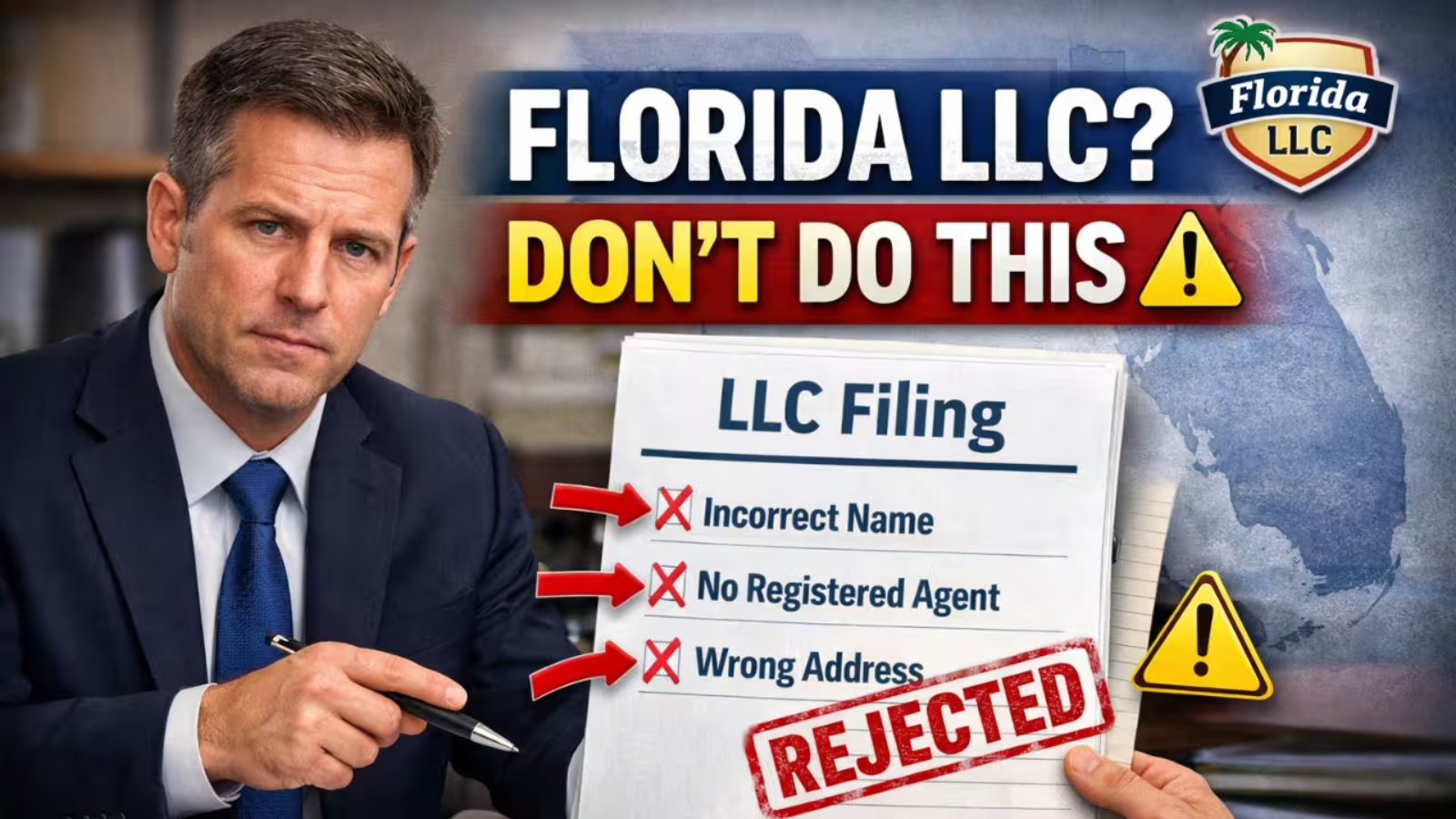
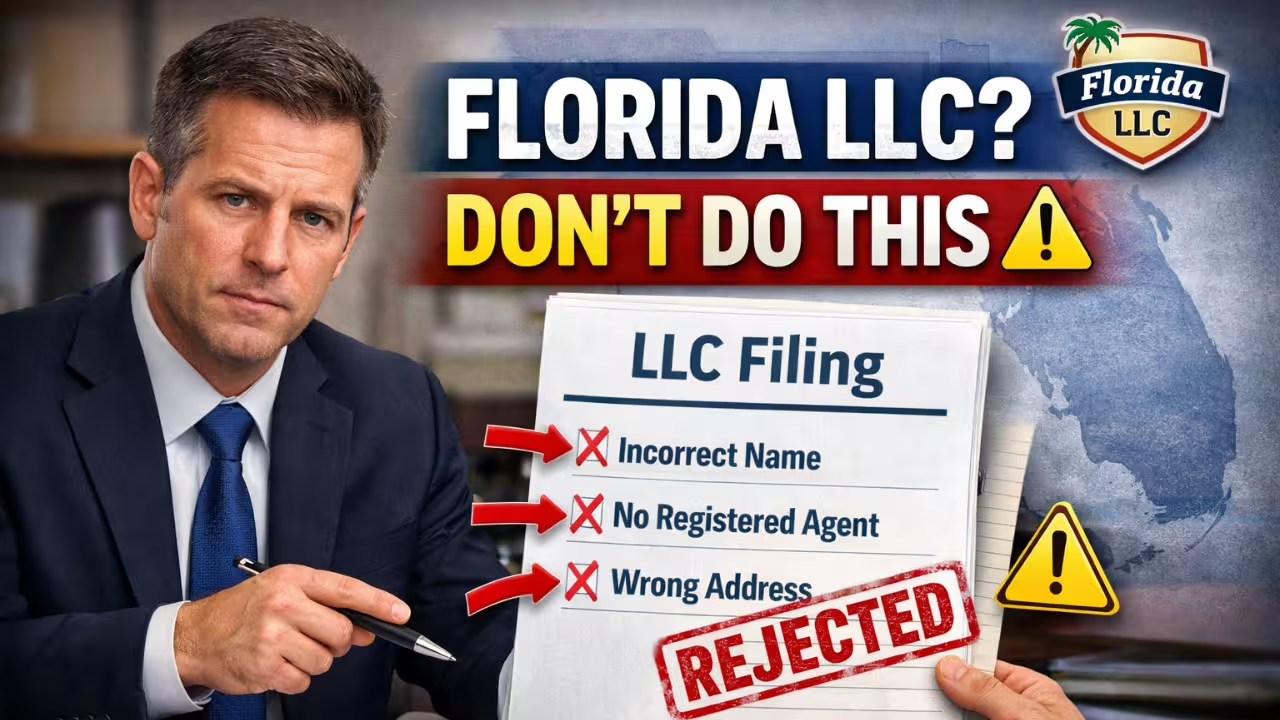
Common Mistakes to Avoid When Setting Up a Florida LLC

Setting Up a Florida LLC: Step-by-Step Guide (2026)

Forming a Florida LLC is straightforward—low fees, online filing, and no state income tax—but many entrepreneurs make costly mistakes. Here’s a practical guide to the essential steps and common traps to avoid.

Key Steps in Setting Up a Florida LLC

1. Choosing the Right Name for Your LLC

Check sunbiz.org before committing to a name. Ensure it is unique and ends with “Limited Liability Company,” “LLC,” or “L.L.C.” Conduct multiple searches, including trademarks and domain names, to avoid delays or denials.

2. Filing the Articles of Organization

File online at Sunbiz. Fees are typically $125–$130. Provide your LLC name, physical address (no P.O. boxes), registered agent info, management structure, and start date. Save confirmation PDFs and screenshots. Accuracy is critical—errors can lead to rejections and additional fees.

3. Appointing a Registered Agent

Your registered agent must have a valid Florida street address and be available during business hours. Options include yourself, a trusted associate, or a professional service ($80–$150/year). A professional agent forwards documents promptly and keeps your personal address off public records.

4. Drafting an Operating Agreement

While optional under Florida law, an operating agreement is strongly recommended, especially for multi-member LLCs. It defines ownership percentages, decision-making, profit distribution, and procedures for exit or death. Templates from Northwest, LegalZoom, or Rocket Lawyer can be customized; consider a lawyer review for partnerships or significant capital.

5. Obtaining Necessary Licenses and Permits

Requirements depend on business type. Examples include:

Obtain an EIN from IRS.gov for banking and tax purposes. Operating without proper licenses can result in fines and legal issues.

Common Mistakes to Avoid

Mistake 1: Chasing the Ghost Publication Requirement

Florida no longer requires LLCs to publish notices in newspapers. This rule only applies to certain DBAs. Spending $150–$400 on ads is usually unnecessary.

Mistake 2: Blurring Personal and Business Finances

Always open a separate business checking account and use it exclusively for LLC transactions. Proper bookkeeping tools like Wave or QuickBooks help maintain clear financial records, preserving liability protection.

Mistake 3: Assuming LLC Eliminates Need for Insurance

LLCs limit personal liability but do not replace insurance. General liability coverage ($500k–$1M) is recommended, with additional professional or workers’ compensation insurance as needed. Shop multiple quotes for best coverage.

Mistake 4: Ignoring Taxes

Obtain an EIN and register for sales tax if applicable. Consider S corporation election to reduce self-employment taxes on profits. Consult a Florida CPA to ensure compliance and avoid penalties.

Mistake 5: Neglecting the Annual Report

Due May 1 each year (~$139). Late submissions incur $400 penalties and risk administrative dissolution. Keep reminders for updates on registered agent, address, or members.

Mistake 6: Failing to Protect Intellectual Property

Check USPTO.gov for trademarks and register key brand assets. Copyrights are automatic, but registration provides stronger enforcement. Consider patents for unique inventions.

Final Recommendations

Florida LLC formation is simple and inexpensive, but errors are costly. Ensure:

For solo, low-risk operations, a DIY approach works. For partners, employees, or higher revenue, consider a formation service or attorney to secure the setup properly. Correct setup allows you to focus on running your business rather than fixing preventable issues.

Frequently Asked Questions

Yes, you can change the name of your LLC after it’s established. However, the process involves filing a Name Change Amendment with the Florida Division of Corporations and paying the necessary fee. It’s advisable to consult with an attorney to ensure a smooth transition and compliance with all legal procedures.

Establishing an LLC in Florida offers several advantages, including limited liability protection, flexible management structure, pass-through taxation, and ease of formation. Florida’s business-friendly environment, absence of state income tax, and favorable climate for entrepreneurship make it an attractive choice for business owners.

Yes, a non-US resident can form a Florida LLC. However, certain requirements need to be met, such as appointing a registered agent with a physical address in Florida and obtaining an Individual Taxpayer Identification Number (ITIN) from the Internal Revenue Service (IRS). It’s advisable to seek professional guidance to navigate the process successfully.

 Yes, you can convert an existing business entity into an LLC in Florida. The process typically involves filing a Conversion or Reorganization document with the Florida Division of Corporations and complying with the requirements specific to your business structure. Consult with an attorney or business professional to ensure a seamless conversion process.

33

The Important Role of a Registered Agent in Forming a Florida LLC: Why You Need One?

For a Florida LLC, having a registered agent is mandatory under state law. This individual or company acts as your official point of contact for legal and government documents, ensuring your business stays compliant and avoids penalties or dissolution.

Role of a Registered Agent

The registered agent receives critical correspondence, including:

They accept these documents and forward them promptly to you, preventing missed deadlines and legal complications.

Benefits of Having a Registered Agent

Good agents forward documents the same day or next. Missing a court notice can lead to penalties, default judgments, or administrative dissolution.

Keeps your personal address off Sunbiz.org and away from spammers, competitors, or unwanted attention.

Non-residents can form a Florida LLC, but the agent must have a physical Florida address.

Ensures someone is available during business hours to accept hand-delivered documents.

Choosing a Reliable Registered Agent

You may act as your own agent if you reside in Florida, have a physical address available during business hours, and are comfortable with it being public. Otherwise, most non-residents and many residents opt for a professional service to ensure compliance and privacy.

Filing Considerations

When filing the Articles of Organization on Sunbiz ($125 fee), you list the registered agent’s name and address. The agent must acknowledge the appointment. Choosing an unreliable agent can lead to extra fees and administrative headaches.

Bottom Line

Do not skip or under-budget for your registered agent. A dependable agent ensures legal documents are handled properly, preserving your LLC’s good standing and allowing you to focus on business operations. For non-U.S. residents, using a national service familiar with Florida rules is strongly recommended.

Frequently Asked Questions

A registered agent serves as the official point of contact between your LLC and the state. They receive legal and tax documents on behalf of your business, ensuring compliance and keeping you informed.

Failure to appoint a registered agent or maintain a current one can lead to serious consequences, such as fines, penalties, and the risk of losing your LLC’s good standing.

Even if you have a physical location in Florida, appointing a registered agent is still necessary. They ensure that important documents reach your business reliably and act as a point of contact for the state.