
How to Change Your Registered Agent on Sunbiz (Step-by-Step)?
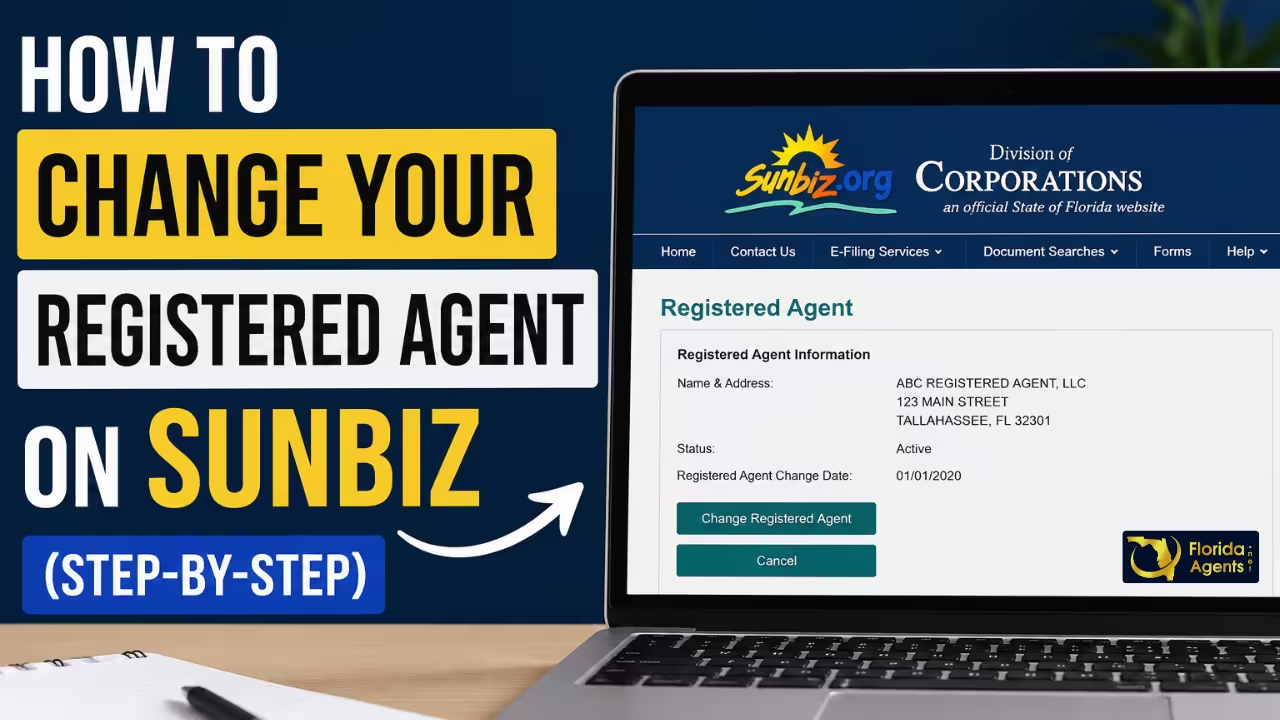
The essence of this framework lies in the necessity to appoint and have a registered agent. Commonly known by either name resident agent and statutory agent, depending on where you hail from, such an individual or entity acts as your designated contact person in dealing with matters of law and the state.
It is important to understand that the relationship between you and the agent is not everlasting. Changes in the structure of the business require a different agent to be appointed. Failure to comply with this rule could mean that you will face serious repercussions, even going up to the dissolution of your Limited Liability Company (LLC) or corporation. This guide provides a detailed look at how to execute a registered agent change, maintain strict LLC compliance requirements, and determine the optimal setup for your growing business using specialized platforms like Florida Registered Agents.
Understanding the Role of a Registered Agent
In order to fully comprehend the process of record updates for state purposes, one must first gain an understanding of what a registered agent is responsible for. The registered agent of a company is the person appointed to receive all official documents from the state including notices of taxation as well as lawsuits.
Every formal business entity must provide a valid registered office address. This cannot be a standard P.O. Box; it must be a physical street address open during standard business hours to accept hand-delivered legal documents. This address becomes a matter of public record, ensuring that the public, the court system, and state regulatory bodies have a reliable means of reaching corporate management.
Why Modern Enterprises Shift to Commercial Registered Agents
When establishing an enterprise, founders frequently ask: Can I be my own registered agent?
The legal answer is yes. In states like Florida, Texas, and Ohio, an owner or officer can serve in this capacity, provided they reside in the state and remain at the designated office address during business hours. However, being your own agent or designating an employee as a noncommercial registered agent presents distinct challenges:
- Privacy Risks: The address at which you conduct personal or professional business becomes public record, leaving you open to endless solicitations and junk mail.
- Reputational Risk: In the event that your company is served with a legal claim, the process server will come to your office and serve you with the suit.
- Restricted Mobility: You are statutorily bound to remain at that specific location during standard working hours, destroying the flexibility of remote or variable schedules.
To mitigate these liabilities, sophisticated operators utilize premium business compliance services. Transitioning from a noncommercial agent to a national commercial registered agent ensures that your legal mail is handled securely, digitized instantly, and managed within a comprehensive entity management framework.
How to Change a Registered Agent: A Universal Framework
1. Secure Your New Appointment
Never submit a change of registered agent form before finalized agreements are in place with the incoming provider. The new agent must formally consent to the appointment. High-caliber providers will furnish a signed statement of acceptance immediately upon registration.
2. Procure the Proper State Documentation
Go to your Secretary of State department or equivalent corporate filings agency site to find the proper change of registered agent form. Templates will not do, as every state requires its own mandatory forms.
3. Execute and Submit the Document
Fill out the paperwork accurately, detailing the exact legal name of your entity, the current agent’s details, and the new office address. Pay the associated state filing fees, which typically range from nominal administrative charges to modest state fees.
4. Verify the Public Record Update
Once submitted, track the filing through your state’s online database. Ensure the change reflects accurately to prevent a breakdown in corporate compliance management.
State-Specific Realities: Key Regional Breakdowns
Different states impose distinct procedural quirks when modifying your regulatory footprint. Below is an overview of requirements across several major corporate hubs.
Step-by-Step: How to Change Your Registered Agent on Sunbiz
Florida
Business owners frequently look up how to change a registered agent in Florida due to the state’s massive volume of new startups. To execute a change of registered agent in Florida, you must file a “Statement of Change of Registered Office and/or Registered Agent” via the Sunbiz portal.
Notably, Florida requires the incoming agent to physically or electronically sign the document to accept the appointment. If you are asking “can I be my own registered agent in Florida?”, you must ensure your registered office address matches your physical Florida location precisely. When utilizing local specialized hubs such as FloridaAgents, operators gain immediate access to pre-signed consent forms and streamlined filing frameworks designed for Sunbiz compatibility.
Texas
If you need to know how to change a registered agent in Texas, the process is governed by the Texas Secretary of State (SOS). You must file Form 401 through the online SOSDirect portal. Texas enforces rigid standards regarding the consent of the new agent; while you do not have to upload the physical consent form, you must legally affirm that the company holds a signed statement of consent on file.
Ohio
For those exploring how to change a registered agent in Ohio, the Ohio Secretary of State requires Form 521 (“Statutory Agent Update”). Ohio explicitly utilizes the term statutory agent rather than registered agent. The form must include the acceptance of an appointment signed directly by the newly designated agent.
Georgia
Understanding how to change a registered agent in Georgia involves using the Georgia Secretary of State Corporations Division portal. Instead of a standalone form, Georgia allows entities to change their registered agent seamlessly by filing an amended annual registration form, handling multiple compliance duties at once.
South Carolina
A South Carolina registered agent change requires filing Form CL-1 with the South Carolina Secretary of State. Unlike states that offer pure digital processing, South Carolina often requires careful attention to traditional filing methods, and the document must be signed by an authorized corporate officer or manager.
Washington
A WA registered agent change is handled via the Washington Corporations and Charities Filing System (CCFS). Washington makes the digital transition highly efficient, but requires immediate updates to prevent the entity from slipping out of active, good-standing status.
Integrating Agent Transitions into Broader Corporate Compliance Management
A change of registered agent should not be handled as an isolated event. Instead, view it as a core component of your broader entity management strategy. When transitioning providers, use the opportunity to review your overall LLC compliance requirements:
- Annual Reports: Ensure your new provider syncs seamlessly with your state's annual or biennial reporting cycle to prevent missed deadlines. With websites such as FloridaAgents, your company is saved from hefty penalties in the hundreds of dollars each year by automating your annual renewal process.
- Corporate Records: Amend your existing Operating Agreement or Bylaws to incorporate the new registered office address.
- Foreign Qualification: In the case where your business operates across several states (e.g., you have an entity in Texas while having another remote commercial registered agent), make sure that your agent network covers all of your qualifying states.
Choosing the Best Registered Agent Services
Selecting a partner to manage your corporate governance requires looking past baseline price tags. The best registered agent services offer robust infrastructure designed to shield your business from legal vulnerabilities. When evaluating a commercial agent or filing agent, look for features like real-time digital mail forwarding, automated compliance alerts for annual filings, and secure cloud storage for service of process records. Reputable regional specialists like Republic Registered Agent LLC or the dedicated platform FloridaAgents provide these exact assurances, ensuring that your state communications remain orderly, confidential, and fully compliant. By choosing a dedicated corporate compliance provider, you offload routine state paperwork and gain the peace of mind needed to focus exclusively on growing your enterprise. Whether you are correcting a legacy filing error or upgrading your corporate infrastructure, executing a registered agent change is a straightforward, highly effective step toward bulletproofing your company’s operational health.
Frequently Asked Questions
How long does it take to change your Florida Registered Agent on Sunbiz?
Most changes are processed within a few business days after you submit the form on Sunbiz.
What is a registered agent for LLC and why change it?
What is a registered agent for LLC? It’s your official contact for legal documents. Many owners change it to get better service, privacy, or reliability.
Can I be my own registered agent after changing on Sunbiz?
Yes, can i be my own registered agent is still possible, but most people switch to a professional registered agent service for better protection.
Do I need to notify the state every time I change my registered agent address?
Yes.You need to officially update your registered agent address through Sunbiz to remain compliant.
How much does it cost to change your Florida Registered Agent?
The Sunbiz filing fee is usually $25. Professional registered agent services florida have their own yearly fees after the change.
Will changing my Florida Registered Agent affect my Florida Annual Report?
No, but you should update your new agent details before filing your next Florida Annual Report.
What happens if I don’t change my registered agent when needed?
Your company could face problems with document delivery and might lose good standing with the state.
Is it better to use a local Florida Registered Agent or national service?
Local registered agent florida options often understand our state better, while national ones work well for bigger operations.
Do I need my EIN Number to change my registered agent on Sunbiz?
No, but having your EIN Number and itin number (if applicable) organized helps with overall business compliance.
Can I change my registered agent multiple times in one year?
Yes. There’s no limit, but each change requires a new filing and small fee on Sunbiz.